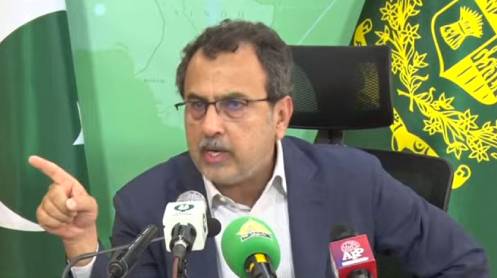
ISLAMABAD: Federal Minister for Energy Sardar Awais Ahmed Khan Leghari on Monday said the government fully supports solarisation but is committed to a “fair and balanced” solar policy to ensure long-term energy stability.
Speaking on key energy sector developments, the minister cautioned that unregulated rooftop solar expansion could create grid stability challenges, stressing the need for proper planning and integration. He noted that while solar energy is being encouraged, reliable sources such as gas remain essential, particularly to meet electricity demand during nighttime.
Leghari highlighted that LNG supplies from Qatar have been affected, making demand management unavoidable. He added that priority in gas allocation would continue to be given to the fertilizer sector, while temporary restrictions may be imposed on commercial and high-end consumers if required.
The minister clarified that Pakistan cannot rely entirely on coal, explaining that while coal serves as a base-load power source, gas-fired plants are critical for providing flexible electricity to stabilize the grid.
He further revealed that following the implementation of the Captive Power Levy, industrial consumers have started returning to the national grid, leading to an increase in electricity demand. In January 2026, power demand recorded a notable growth of 12.1 percent.
Leghari also stated that the government’s surplus power package has enabled industries to save over Rs12 billion, reflecting positive outcomes of recent policy measures.
Despite the ongoing LNG challenges, he maintained that Pakistan’s power system remains stable. He emphasized that the government is actively pursuing energy sector reforms, including privatization and third-party access, to improve efficiency and sustainability.
Reaffirming the government’s direction, the minister said consumers are being encouraged to adopt solar and other clean energy solutions, while ensuring that energy security, system stability, and economic continuity remain top priorities.